-As read at the memorial to my Mom and Dad and published now to honor their 75th Wedding Anniversary
I am the first to stir. Mark is still asleep in the top bunk.
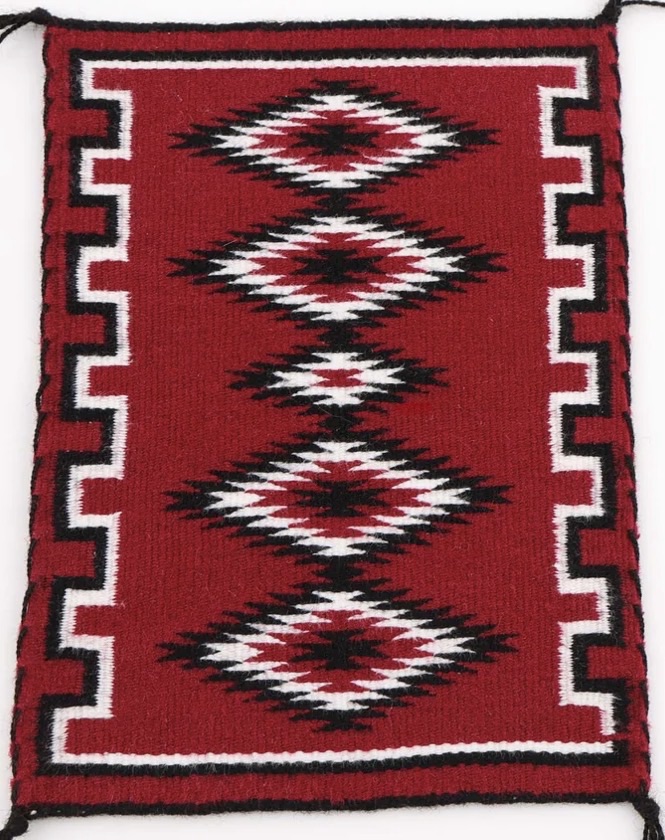
The first thing I see when I get up is a tiny red rug. It is rectangular with a fringe at each end and has interlocking black and white triangles. We have it on top of our dresser as you would a placemat. We bought it from some Indian weavers along the side of the road last summer on our trip out West. To call it a rug is charitable. It is more like a sample of a rug. I suspect the Indians hoped you would return someday and buy one that’s full-size.
Mom and Dad are already clomping around making noises downstairs. It is late January 1969. Next week, I will be sixteen.
And, today, like every Saturday in the winter, we will go skiing.
We live in a town called East Greenbush across the river from Albany. Greenbush was the name the Dutch gave this place three hundred years earlier. We assume the bushes were green then, but now it is winter, and everything is cold and gray and snowy.
As I go downstairs to the kitchen, I hear Dad outside loading up the enormous burnt-orange Plymouth station wagon with the faux wood trim. He is shoveling in skis, and boots, and poles. Mom greets me and pulls out a box of Blueberry toastettes from the cabinet. I know where to find the Carnation instant breakfast and grab a chocolate one from the box of assorted flavors. Nobody wants to be stuck drinking the packet labeled “Strawberry Vanilla”. It tastes like fruit and defeat.
Mom has been working now for several years as an elementary school teacher and she loves her work. She loves her kids. But, this leaves her almost no time to prepare real food. Not that we would actually eat anything she spent hours painstakingly preparing. The freezer is filled with meals in boil-in-bags and TV dinners and frozen hot dogs and french fries.
Last night, she pulled out a package of hot dogs and now she places them in a wide mouth thermos. She fills the thermos with boiling water and screws the top closed. This will be our lunch.
Hard rolls are sliced open and slathered with peanut butter. Some will be adorned with Marshmallow fluff and others will have a Hershey bar slipped into them. This will be our late afternoon snack.
A family ski trip in 1969 is fueled by sugar, artificial colors and flavors, nitrates, nitrites, partially-hydrogenated fats, and various glycerides. It’s how we roll.
The giant Plymouth land cruiser has been idling a while to get warm but it is still cold as we all slide in. In an hour it will be brutally hot, but for now we huddle in our parkas and turtlenecks and doze. The machine rolls out of the driveway crunching as it goes.
After an hour and half, we pass Glens Falls on the interstate which we call the Northway. This is its name to this day and if you say Interstate 87 to an Albanian, they will blink a bit and wonder what the hell you are talking about. It is the Northway. It goes North. To the Klondike ultimately, but today we are only going as far as Warrensburg, and then on to North Creek, NY, home of Gore Mountain.
When we arrive, Denny parks the family wagon beast close to the lodge which is part of the reason we leave so early. We want to arrive by 8:30 so that the lifts are just starting and there’s no crowd. Also, parking so close allows Mom and Dad to more easily lug the beat-up green Coleman cooler and various knapsacks to the lodge. Mark and I will be no help. We will grab only our equipment and rush ahead. The family has a designated spot in the rear of the lodge, close to the main chair and near the skating rink on which no one ever seems to skate.
As we head in, I notice for the first time my sister Amy. I had not been aware of her beforehand and will not think of her again the rest of the day. Neither will Mark.
No, we live only to ski.
Mark and I head out to the chair and are among the first to go up. I am very excited because Mom and Dad bought me a new pair of ski poles for my upcoming birthday. Scott Ski poles, the official poles used by the US Olympic team. They are light. They are strong. No more no-name poles for me.
The main chair, the East Chair as it is called, drops us at the top and we adjust our goggles and head further along the top of the ridge to the North Chair. This will bring us to an even higher point and while fewer people bother to go there, Mark and I are savvy. We are experienced. We know what to do. It is a long slog and we have to skate on our skis to get there, but that’s a good warm up. We will spend the morning here, going up and down. It is steep with several black diamond trails. We are not yet as good as we will become with time, but we force our way down, our metal skis clattering against the eastern ice.
Someday soon, Mark will become a far better skier than I, as will my sister. But today we are about the same and it is not about grace. Not today. It is about speed.
The entire morning of skiing is just a rehearsal for the race to come. At some point, about 11:30, we will agree it’s time for lunch. We will head up the North chair once more and when we get to the top, we will both spring out of the chair lift as fast as possible, grasping our poles and adjusting our goggles as we fly. We will race to slope and hurtle down. If you are unlucky enough to be in our path, you better have yourself under control. Nothing gives us more delight than to hurtle by a startled novice or an adult who is unsteady on their skis in our death race to lunch. Later we will laugh about the girl who upon merely hearing our approach, sat on her skis and descended backwards completely out of control, or the two adult men who cursed us, but now we are focused on the prize: being the first to main lodge.
As we reach the access path to the lower East Chair, I am out front. Obviously these new lighter poles have already paid off. I push and chug and skate as fast as I can to make the most of the momentum I have built up, but it slowly dissipates. I glance back. Mark is right behind me.
Soon, we reach the top of the East Chair where a crowd is formed. College kids are sunning themselves or eating lunch at a few rickety tables. Families are gathering and making plans to met for lunch below. We hurtle through them aware, but indifferent. People react by saying “Watch out!” or “Hey, you idiots, slow down!”. We smile and bear down adopting the tuck positions we have seen on “Wide World of Sports”.
We drop down the mountain like lead sinks in the ocean.
A crucial decision point immediately presents itself. Will we continue down the steeper trail directly below the East Chair and risk the humiliation of a fall in full view of its passengers, or will we take the longer but more manageable trail to the right? Mark has taken a slight lead and he tacks right. I follow in his wake, drafting in the vacuum he creates.
We fly by. We are a blur.
There is only one option in our racing. It is an unwritten rule that if we see a family member has fallen in front of us, the race is over. Our primary directive changes to one of deepening their humiliation by flying right towards them and at the last second coming to a stop so as to spray as much snow on them as possible. It is deeply satisfying. And, suddenly, we see it below. There’s Mom gently skiing down the slope. We hurtle by her menacingly close. In the receding distance we hear “Boys!”. As Mom was only in our path and had not fallen, the race is still on.
Finally, the base lodge. In a crescendo of snow, we arrive, explode out of our bindings, and hurry in to lunch.
Mom drifts in to the lodge muttering scoldingly and we have already secured cans of A&P brand sodas from the beat up green cooler.
While it never occurred to me to question my Mom’s preference for the occasional off-brand product, I much later realized just how expensive it is to bring a family skiing, to pay for the season passes and the food and the gas for the prehistoric forest burning orange monster we travel in. This was their way of coping while still saving for our college expenses to come. When I realized twenty years later that I wouldn’t be able to afford to do this for my own family, it was humbling. Edie and Denny would step in and take all my kids skiing as often as they could. And, to my great joy, they became little ski monsters too.
Mom is greeting all the lunchtime regulars in the lodge. She has an easy way of making others feel comfortable. She begins to tell the story of how Denny ditched her when a group of young college girls called out “Single!” and he slid to the front of the line to accommodate, leaving Mom alone.
Denny with his silver hair is rakishly handsome, for a dad. He is always pleasant, if a bit unsteady on his skis. In chatting up this particular young lady, he determined she was visiting friends in Saratoga and currently attended North Carolina. He shares these important facts as if he is the Gore Mountain Tribune’s Roving Reporter and risked life and limb to unearth this important scoop. Edie simply scoffs and reminds him those young girls have no interest in him and he tries to look hurt while winking at us.
And so the day goes. Up and down. Mark and I race down once again for a snack about 3 o’clock and then time the chair lift for the last run at 4. The final race is always the best. The slopes are now largely empty and it would just be boy against mountain against boy without any obstacles or excuses.
Finally, we pack up. Again, Mark and I are of almost no help, but we do manage to stuff our own equipment into the back of the orange Plymouth and get in. Soon, we are underway and it is already dark. Any snacks or food remnants are quickly consumed.
When we get home, Mom undoes the top button of her ski pants, grabs a bottle of beer and puts a boil-in-bag of rice in a saucepan. Dad cleans out the car, and soon joins her. The kitchen is full of a wonderful smell. That morning before anyone else came downstairs, Mom had thrown some chicken breasts and a can of stewed tomatoes into the crock pot and the aroma now fills the house. Mark and I take turns showering and we all sit down for dinner.
Soon, we all in various states of drowsiness, retire to the front room. “Get Smart” is on the TV.
In a few months, I will begin my first job and I will not stop working regularly for the next forty years. I will meet a young girl who will later become my wife. The Mets will win the World Series and Man will walk on the moon. But, I know none of this now.
Suddenly, I hear a odd giggle. I look around and see Amy curled up between my mom and my dad.
And, I think to myself, “I love my new poles.”
 The states formed a republic which is committed to shared values and common objectives as determined by the federal government. Thus, states like New York and California pay more in taxes than they receive in federal services. This allows the federal government to use the excess tax receipts to build roads and provide health services in poorer states like Mississippi or Alabama, roads and health care which those states otherwise could not afford on their own.